
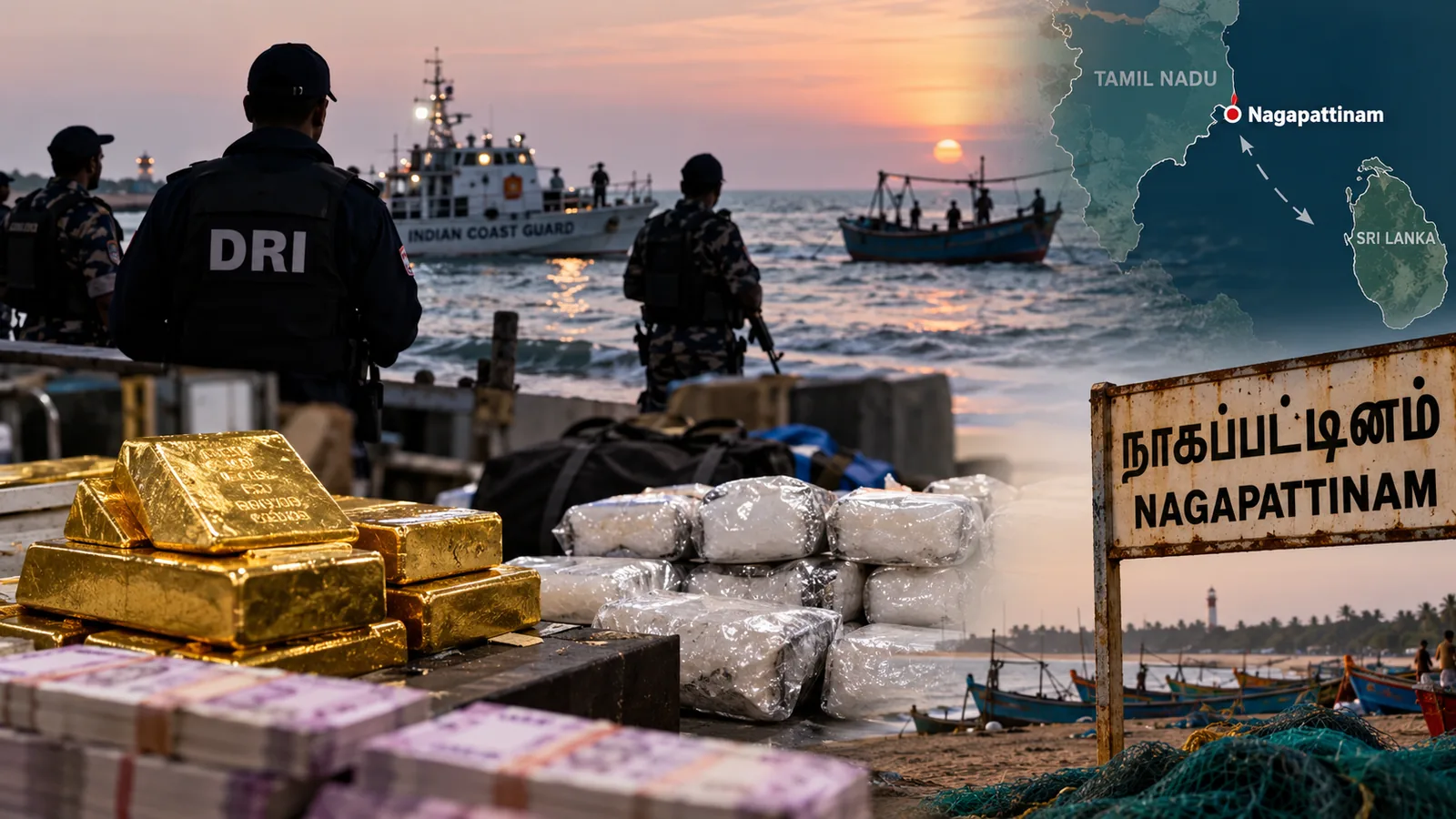
137 kg of Crystal Methamphetamine Seized
On October 16 and 17, 2026, the Directorate of Revenue Intelligence (DRI) conducted an operation along the Nagapattinam coast and seized 137 kg of crystal methamphetamine, according to reports about the operation.
The seized narcotics were estimated to have a value exceeding ₹100 crore in the illegal market. The substance was reportedly packed in 27 silver-foil-wrapped packets kept inside six bags.
During the investigation, authorities also reportedly seized ₹10 lakh in cash and vehicles suspected of being connected to the operation.
According to the reported findings, the consignment was allegedly intended to be transferred to another vessel at sea before being transported to Sri Lanka. Four people were arrested in connection with the case and remanded to judicial custody.
The investigation is expected to examine the origin of the consignment, the intended recipients and the possible involvement of a wider smuggling network.
Gold Worth ₹7.85 Crore Seized in January
An earlier incident in January 2026 also highlighted concerns about suspected gold smuggling along the Nagapattinam coastline.
On January 1, authorities reportedly seized 5.788 kg of gold bars near Vizhundamavadi in Nagapattinam district. The gold was estimated to be worth approximately ₹7.85 crore.
According to media reports, officers from the state police's Q Branch acted on information about gold allegedly being transported from Sri Lanka by sea. The gold was discovered during a search of a person travelling on a two-wheeler.
One person was reportedly arrested, and the matter was referred to the relevant customs authorities for further action.
The seizure highlighted the continuing challenge of detecting suspected illegal gold movements across the maritime border between India and Sri Lanka.
Why Is the Nagapattinam Coast Strategically Important?
Nagapattinam district lies along Tamil Nadu's southeastern coastline, facing Sri Lanka across the Palk Strait region. Coastal areas such as Vedaranyam and Kodiyakarai are associated with fishing, maritime movement and coastal livelihoods.
The geographical proximity between the two countries makes maritime surveillance an important security priority. Fishing vessels and other boats operate in the region, requiring authorities to distinguish legitimate maritime activity from suspicious movements.
Smuggling attempts can involve transporting goods by boat, transferring consignments between vessels or moving goods from coastal landing points to inland locations. However, the specific methods used can differ from one case to another.
Although individual seizures indicate that illegal transport attempts have occurred, they do not, by themselves, establish that the entire Nagapattinam coastline is a permanent or dominant international smuggling corridor.
What Drives Gold and Drug Smuggling?
Gold smuggling and narcotics trafficking are different criminal activities, although both can exploit maritime routes and gaps in enforcement.
Gold smuggling may be driven by differences in gold prices, customs duties and the potential profits from avoiding legal import procedures.
Narcotics trafficking, meanwhile, can involve organised criminal networks that coordinate the sourcing, storage, transportation and distribution of illegal substances. Investigators may examine financial transactions, communication records, vehicles, vessels and links between suspects to establish the extent of such networks.
In the Nagapattinam cases, the precise relationships between those arrested, the origin of the seized goods and any wider criminal connections must be established through evidence and the ongoing legal process. General explanations of smuggling methods should not be treated as confirmed findings in a particular investigation.
Maritime Security Challenges Along the Tamil Nadu Coast
Monitoring an extensive coastline is a complex task. Fishing activity, small vessels and multiple coastal access points can make it difficult for enforcement agencies to identify suspicious movements without effective intelligence and coordination.
The Indian Coast Guard, state police, customs authorities and the Directorate of Revenue Intelligence play different roles in maritime security and the investigation of suspected smuggling activities.
Strengthening coordination among these agencies can help improve the exchange of intelligence, surveillance of suspicious vessel movements and investigations into the financial networks behind illegal consignments.
Other important measures include:
Increasing coastal patrols and maritime surveillance.
Strengthening intelligence collection in vulnerable coastal areas.
Investigating the financial transactions associated with suspected smuggling operations.
Improving coordination between law enforcement and customs authorities.
Encouraging fishing communities to report suspicious maritime activity through appropriate channels.
Such measures can help authorities identify criminal networks rather than focusing exclusively on the individuals caught transporting a particular consignment.
The Need for Further Investigation
The recent seizures have renewed attention on the security of the Nagapattinam coast and the possibility that maritime routes in the region are being exploited for illegal trade.
However, establishing the full scale of the problem requires reliable data on seizures, arrests, investigations and convictions over time. It is also important to distinguish allegations made during an investigation from facts established through court proceedings.
Investigators will need to establish where the seized goods originated, who was expected to receive them, how the transport arrangements were organised and whether the cases are connected to larger criminal networks.
Conclusion
The seizure of 137 kg of crystal methamphetamine in October 2026 and the reported recovery of 5.788 kg of gold in January 2026 highlight the importance of maritime security along the Nagapattinam coastline.
The incidents raise legitimate questions about suspected smuggling activities and the effectiveness of existing surveillance measures. At the same time, determining whether the area functions as a major smuggling corridor requires broader, verified evidence beyond individual seizure cases.
Continued investigations, stronger coordination among enforcement agencies and effective coastal surveillance will be essential to prevent illegal trafficking and protect the region's maritime security.
Sources for verification: Directorate of Revenue Intelligence information concerning the October 2026 narcotics seizure; The New Indian Express reporting on the January 2026 gold seizure.
TimesOfCosmos – Reporting news with facts and context.