
By TimesOfCosmos News Desk | Published: October 14, 2026 | Category: India News / Politics
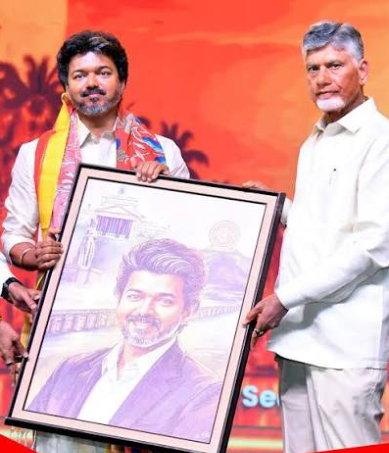
Vijayawada, Andhra Pradesh: Tamil Nadu Chief Minister C. Joseph Vijay visited Vijayawada on Tuesday, October 13, 2026, for a meeting with Andhra Pradesh Chief Minister N. Chandrababu Naidu, discussions on inter-state water sharing and participation in Vijayawada Utsav 2.0.
The visit brought attention to two important issues affecting southern India: Chennai's drinking-water requirements and the proposed Godavari–Cauvery river-linking project. Reports published on October 14 said Andhra Pradesh had agreed to release Krishna River water to Chennai over the following two months. The release schedule and implementation details remain important to monitor.
Vijay Meets Chandrababu Naidu on Water Sharing
Vijay met Naidu at his residence in Undavalli, in Andhra Pradesh's Guntur district, on October 13. According to media reports, the Tamil Nadu Chief Minister requested additional drinking water for Chennai through the Telugu Ganga project.
The Telugu Ganga arrangement provides a framework for supplying Krishna River water to meet Chennai's drinking-water needs. Water availability has remained a concern amid reduced inflows and pressure on supplies.
Following the meeting, DT Next reported on October 14 that Andhra Pradesh had agreed to release Krishna water to Chennai over the next two months. The development could help support the city's drinking-water requirements, although the actual volume delivered will depend on the release schedule and implementation.
The discussions highlighted the importance of coordination between neighbouring states over shared water resources.
Godavari–Cauvery River-Linking Project Discussed
The two chief ministers also discussed the proposed Godavari–Cauvery river-linking project, a long-term initiative intended to improve water availability across parts of southern India.
Vijay urged Naidu to support moving the proposal forward. Reports said Vijay had also requested Prime Minister Narendra Modi to consider declaring the project a matter of national importance.
Supporters of river linking argue that transferring surplus water from water-rich river basins could help address shortages in drought-prone areas and support agriculture and drinking-water supplies.
However, the project involves complex questions concerning water availability, environmental impacts, funding, technical feasibility and coordination among the states concerned. Further official decisions and clearances would be needed before implementation.
Vijay Visits Kanaka Durga Temple
During his Vijayawada visit, Vijay offered prayers at the Sri Kanaka Durga Temple on Indrakeeladri Hill amid the ongoing Dasara and Navaratri celebrations.
Temple priests welcomed him with traditional honours and conducted special puja rituals. Vijay, dressed in traditional attire, greeted devotees who had gathered at the temple.
The visit attracted attention from devotees and supporters, adding a religious dimension to his programme in Andhra Pradesh.
The temple, located on the banks of the Krishna River, is one of Vijayawada's most prominent religious landmarks and draws large numbers of pilgrims during the annual Dasara festivities.
Vijay Joins Vijayawada Utsav 2.0
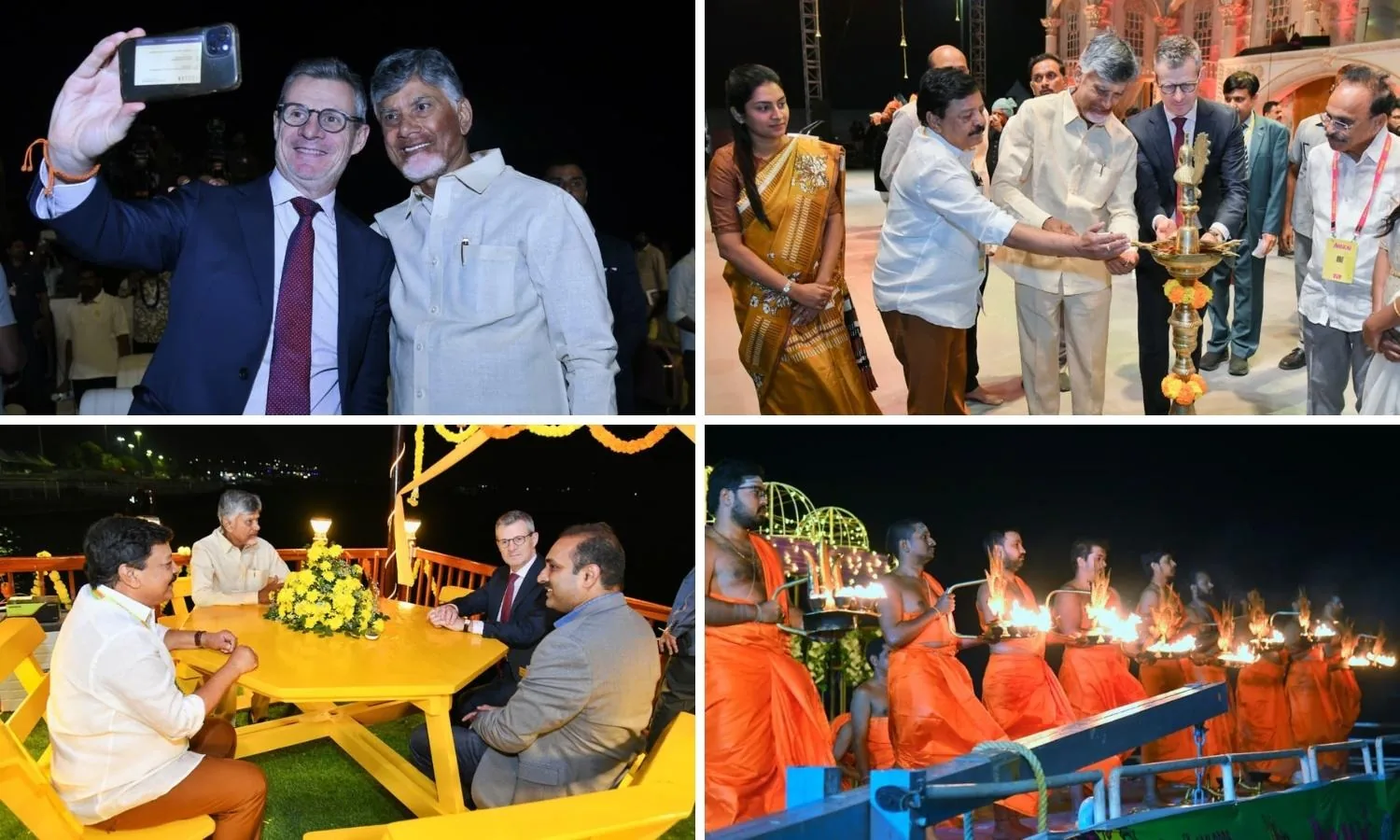
Vijay later joined Chandrababu Naidu at Vijayawada Utsav 2.0, held near Punnami Ghat on the banks of the Krishna River.
The festival showcased cultural and devotional programmes as part of the city's festive celebrations. Vijay addressed the gathering in Telugu, beginning with the greeting “Andariki namaskaram,” and extended his wishes for Navaratri.
His participation drew enthusiastic responses from attendees. The event brought together cultural celebrations and a high-profile meeting between the chief ministers of two neighbouring states.
Why the Visit Matters
Vijay's visit placed regional cooperation and water security at the centre of public attention.
For Chennai, additional Krishna water releases could provide support during periods of water stress. For both states, discussions on the Godavari–Cauvery proposal raise broader questions about how southern India can manage water resources amid changing rainfall patterns and competing demands.
The reported agreement on water releases represents a near-term development to watch. The proposed river-linking project, by contrast, remains a longer-term issue requiring detailed planning, inter-state cooperation and appropriate approvals.